AI Innovations: Why Artificial Intelligence is Shaping Our Future
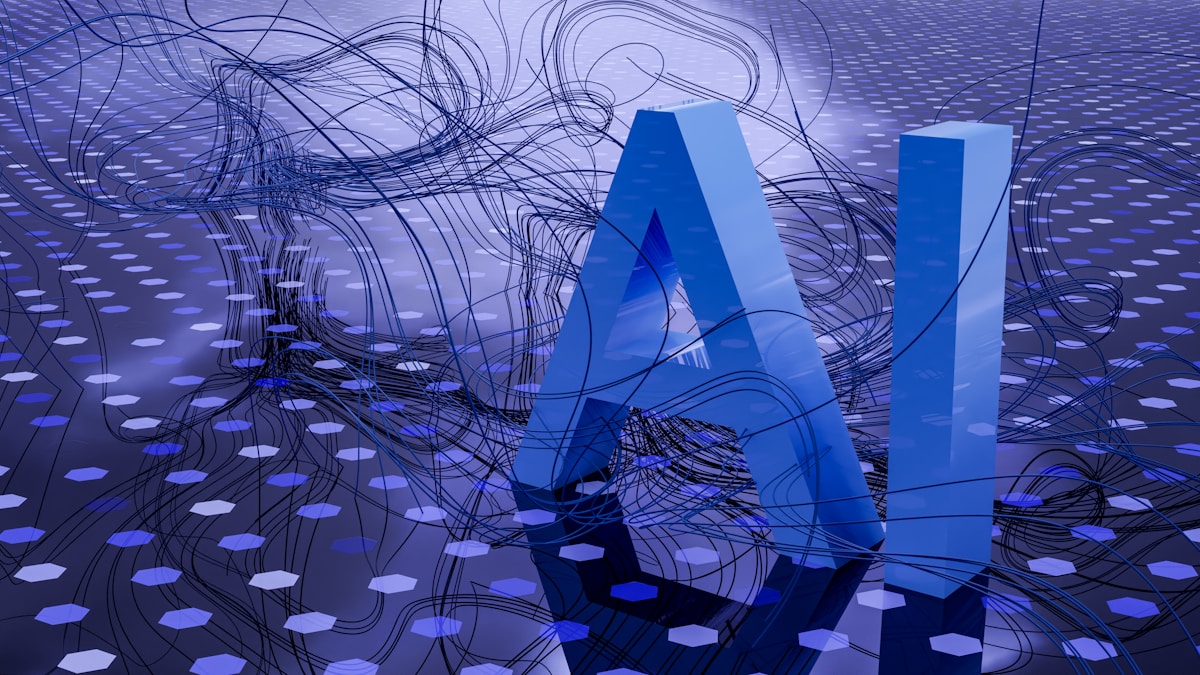
Artificial Intelligence is no longer the stuff of science fiction—it's a transformative force reshaping every aspect of our lives and business. From healthcare diagnostics that save lives to autonomous vehicles navigating our streets, from personalized education to creative tools that augment human imagination, AI is fundamentally changing what's possible. This revolution is accelerating, and understanding its implications is essential for anyone looking to thrive in the coming decades.
The Current State of AI Technology
Today's AI systems have achieved capabilities that seemed impossible just a few years ago. Machine learning models can now understand and generate natural language with remarkable fluency, recognize objects and faces with superhuman accuracy, compose music and create art, and make complex decisions in dynamic environments.
Deep learning—neural networks with many layers—powers most modern AI breakthroughs. These models learn patterns from vast amounts of data, discovering relationships and structures that programmers never explicitly coded. The more data they process and the more parameters they have, the more sophisticated their understanding becomes.
Large Language Models like GPT-4 and Claude demonstrate AI's potential to understand and generate human language. These models can write essays, answer questions, translate languages, write code, and engage in nuanced conversations. They've become invaluable tools for knowledge work, augmenting human capabilities across countless domains.
Computer vision has matured to the point where AI can match or exceed human performance in visual tasks. Medical imaging systems detect diseases from X-rays and MRIs with greater accuracy than human radiologists. Self-driving cars navigate complex environments by understanding the visual scene around them. Facial recognition systems, despite privacy concerns, demonstrate AI's perceptual capabilities.

AI in Healthcare: Saving Lives and Improving Care
Healthcare represents one of AI's most impactful application areas. AI systems analyze medical images to detect cancer, heart disease, and other conditions earlier and more accurately than traditional methods. This early detection dramatically improves treatment outcomes and saves lives.
Drug discovery, traditionally a decade-long process costing billions, is being revolutionized by AI. Machine learning models predict how molecules will interact, identifying promising drug candidates far faster than trial-and-error laboratory work. AI designed its first drugs are now entering clinical trials, potentially bringing life-saving treatments to patients years sooner.
Personalized medicine uses AI to tailor treatments to individual patients based on their genetics, lifestyle, and medical history. Instead of one-size-fits-all approaches, doctors can predict which treatments will work best for each patient, maximizing effectiveness while minimizing side effects.
Administrative automation through AI reduces healthcare's massive paperwork burden. Natural language processing extracts information from medical records, automates billing and insurance claims, and helps doctors focus on patient care rather than documentation. This improves efficiency and reduces burnout among healthcare professionals.
Transforming Business and Industry
Manufacturing is being revolutionized by AI-powered automation and optimization. Predictive maintenance systems analyze sensor data to predict equipment failures before they happen, preventing costly downtime. Computer vision systems inspect products for defects with greater speed and accuracy than human inspectors.
Supply chain optimization uses AI to predict demand, optimize inventory levels, and route shipments efficiently. During the pandemic, companies with AI-powered supply chains adapted more quickly to disruptions, highlighting the technology's value for resilience and agility.
Customer service has been transformed by AI chatbots and virtual assistants. These systems handle routine inquiries 24/7, freeing human agents for complex issues requiring empathy and judgment. Natural language understanding has improved to the point where many customers can't tell they're talking to AI.
Financial services use AI for fraud detection, credit scoring, algorithmic trading, and personalized financial advice. Machine learning models identify suspicious transactions in real-time, protecting customers from fraud. AI-powered robo-advisors democratize access to sophisticated investment strategies previously available only to the wealthy.
Marketing and sales leverage AI for customer segmentation, personalization, and predictive analytics. Recommendation engines suggest products customers are likely to want. Predictive lead scoring identifies the best prospects for sales teams to pursue. Dynamic pricing optimizes revenue in real-time based on demand and competition.

AI in Creative and Knowledge Work
Contrary to predictions that AI would only replace manual labor, it's proving highly capable in creative and cognitive domains. AI-generated art, music, and writing challenge our assumptions about creativity and authorship while providing powerful tools for human creators.
Content creation tools use AI to generate drafts, suggest improvements, and adapt content for different audiences. While human oversight remains essential, these tools dramatically accelerate the creative process. What once took hours can now happen in minutes, freeing creators to focus on strategy and refinement.
Code generation AI like GitHub Copilot assists programmers by suggesting code completions, explaining complex code, and even generating entire functions from natural language descriptions. These tools make programming more accessible and help experienced developers work more efficiently.
Research and analysis benefit enormously from AI's ability to process vast amounts of information. AI can read thousands of research papers, summarize key findings, and identify patterns that would take humans months or years to discover. This accelerates scientific discovery and helps researchers build on existing knowledge.
The Challenges and Risks of AI
AI's rapid advancement raises important concerns that society must address. Bias in AI systems reflects and can amplify biases in training data, potentially perpetuating discrimination in high-stakes decisions like hiring, lending, and criminal justice. Ensuring fairness requires careful attention to data, algorithms, and deployment contexts.
Privacy concerns arise from AI's data hunger. Training sophisticated models requires vast amounts of data, often including personal information. Balancing AI's benefits with individual privacy rights requires thoughtful regulation, technical safeguards like differential privacy, and transparent data practices.
Job displacement is a legitimate concern as AI automates tasks across the economy. While new jobs will emerge, the transition may be disruptive for workers whose skills become obsolete. Society needs robust retraining programs, social safety nets, and policies that ensure AI's benefits are broadly shared.
Security vulnerabilities in AI systems create new attack vectors. Adversarial examples—inputs specifically crafted to fool AI systems—could compromise autonomous vehicles, facial recognition systems, or financial algorithms. Developing robust, secure AI is an active area of research with high stakes.
The existential risk from advanced AI, while speculative, is taken seriously by researchers. As AI systems become more capable, ensuring they remain aligned with human values and goals becomes critical. The field of AI safety works to address these challenges before they become pressing.
Ethical Considerations and Governance
The power of AI demands careful ethical consideration. Who benefits from AI? Who decides how it's used? How do we ensure AI serves humanity rather than harming it? These questions require ongoing dialogue between technologists, policymakers, ethicists, and the public.
Transparency and explainability are crucial for AI systems making important decisions. If an AI denies your loan application or medical treatment, you deserve to understand why. Research into interpretable AI aims to make these systems less like black boxes and more accountable.
Regulation of AI is emerging worldwide, balancing innovation with protection. The European Union's AI Act classifies AI applications by risk level and applies appropriate requirements. Other jurisdictions are developing their own approaches, creating a complex global landscape for AI governance.
Corporate responsibility matters as private companies develop and deploy AI systems with profound societal impacts. Leading AI companies are establishing ethics boards, conducting impact assessments, and engaging with stakeholders. However, voluntary measures may not be sufficient—regulation and public oversight remain essential.
AI and Education: Transforming Learning
Education is being revolutionized by AI-powered personalized learning platforms. These systems adapt to each student's pace, learning style, and knowledge gaps, providing customized instruction that traditional classrooms can't match. AI tutors are available 24/7, offering unlimited patience and tailored explanations.
Assessment and grading automation frees educators to focus on teaching and mentoring. AI can evaluate essays, provide feedback, and identify areas where students struggle. This data helps teachers intervene early when students fall behind and adjust instruction to address common misconceptions.
Language learning benefits particularly from AI. Conversational AI provides unlimited speaking practice with instant feedback on pronunciation and grammar. Translation tools help learners understand authentic content in their target language, accelerating acquisition through immersion.
The Path Forward: AI and Human Flourishing
The question isn't whether AI will shape our future—it's already doing so—but how we can steer that influence toward human flourishing. AI should augment human capabilities, not replace human judgment and values. The most powerful applications combine AI's computational strengths with human creativity, empathy, and ethical reasoning.
Education must evolve to prepare people for an AI-enabled world. This means both technical skills to develop and work with AI, and uniquely human skills like critical thinking, creativity, and emotional intelligence that complement AI capabilities. Lifelong learning becomes essential as the pace of change accelerates.
Democratizing AI access ensures its benefits reach everyone, not just wealthy individuals and powerful corporations. Open-source AI tools, accessible cloud platforms, and education initiatives can level the playing field. Policies should prevent monopolization of AI capabilities and ensure competitive markets.
International cooperation on AI governance, safety, and ethics is essential. AI development is global, and challenges like bias, privacy, and security transcend borders. Forums for dialogue and coordination can help establish norms and standards that protect humanity while fostering innovation.
Conclusion: Embracing the AI Future
Artificial Intelligence represents one of humanity's most powerful technologies—a general-purpose innovation that will eventually touch every aspect of life. Like electricity or the internet before it, AI will create opportunities and challenges we can barely imagine today.
The organizations and individuals who thrive in this AI-enabled future will be those who thoughtfully integrate these tools while maintaining focus on human needs and values. AI is not magic or destiny—it's a technology we can shape through our choices and actions.
Now is the time to engage with AI: learn its capabilities and limitations, experiment with applications in your domain, and contribute to conversations about its governance and ethics. The future isn't something that happens to us—it's something we create together. With wisdom, foresight, and commitment to human flourishing, we can ensure AI becomes a force for tremendous good.
Tags
Related Posts

OpenClaw: The AI Assistant That Actually Does Things
OpenClaw is revolutionizing personal AI assistants by moving beyond simple chatbots to an autonomous agent that can actually perform real-world tasks—from managing your inbox to booking flights, all while running on your own computer.
The AI Video Revolution: How Artificial Intelligence is Transforming Video Creation
Discover how AI-powered video generation tools are democratizing content creation, enabling anyone to produce professional-quality videos from simple text prompts in minutes.

Building Modern Web Applications: Best Practices for 2026
Learn the essential best practices, frameworks, and tools for building fast, scalable, and user-friendly web applications in 2026.
Comments (0)
Please log in to leave a comment.
No comments yet. Be the first to share your thoughts!